Steel
The value option, and the most secure. Great for a straight-forward front or side door where price and strength matter more than a wood look.

Steel, fibreglass, or wood. Any colour. Any Configuration. Made specifically for your opening—not trimmed down to fit it.
The value option, and the most secure. Great for a straight-forward front or side door where price and strength matter more than a wood look.
Best long-term choice for most homes. Will not warp, rust or rot, holds paint and stain well, and stays tight across our temperature swings.
Real wood, for character homes where the door is part of the architecture. Needs a proper overhang and periodic refinishing to last.
No door is invincible. What these options do is buy time and make a break-in far more difficult.
A tough interlayer bonds the panes together. When it is struck the glass is designed to stay together in the frame rather than fall away, which makes forced entry slow, loud and difficult.
Heat-treated for impact resistance, and if it does break it crumbles into small blunt pieces instead of long shards.
One turn of the handle throws bolts at the top, middle and bottom of the door, so it is secured along the whole height of the frame instead of only at the centre.
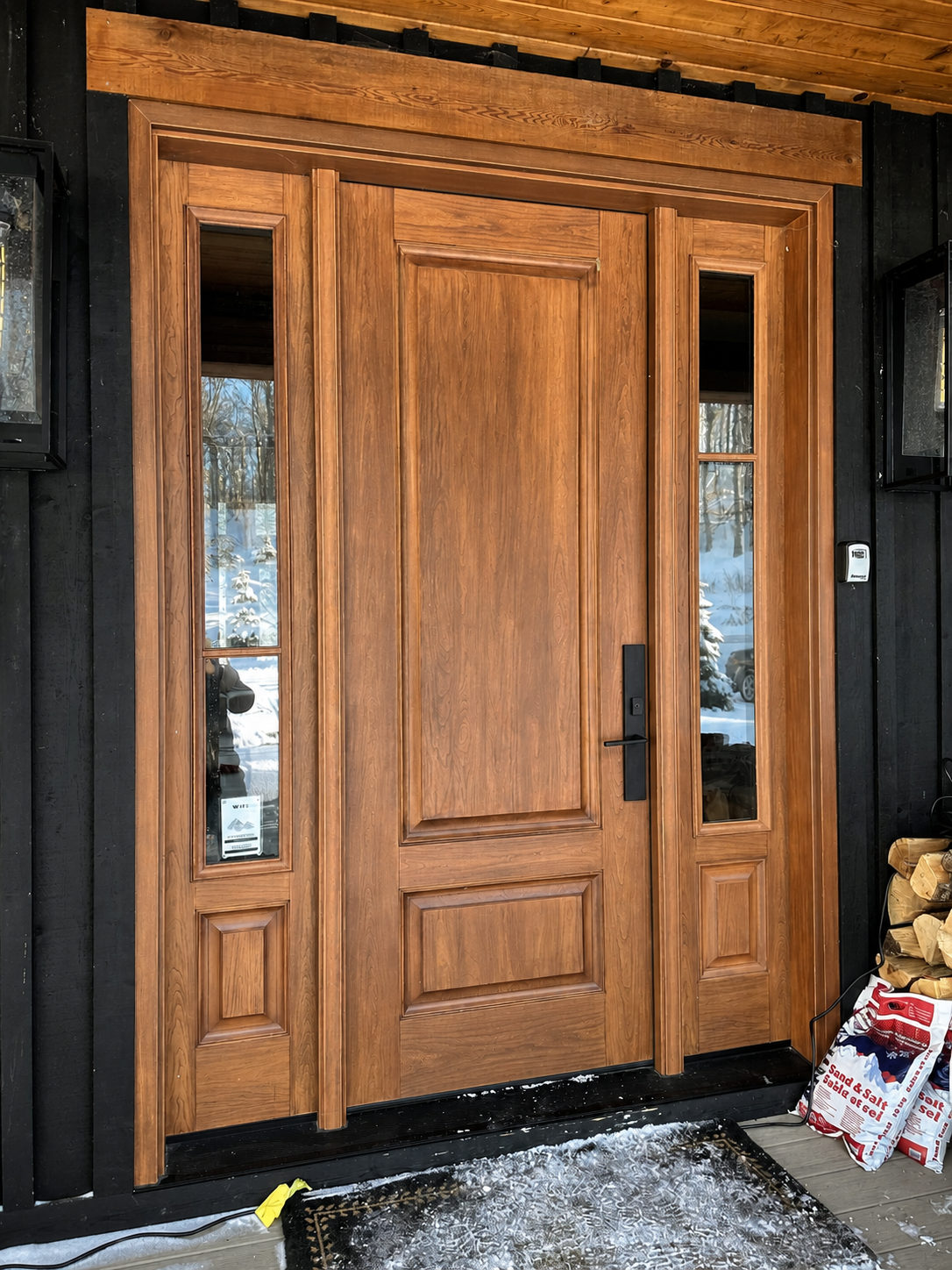
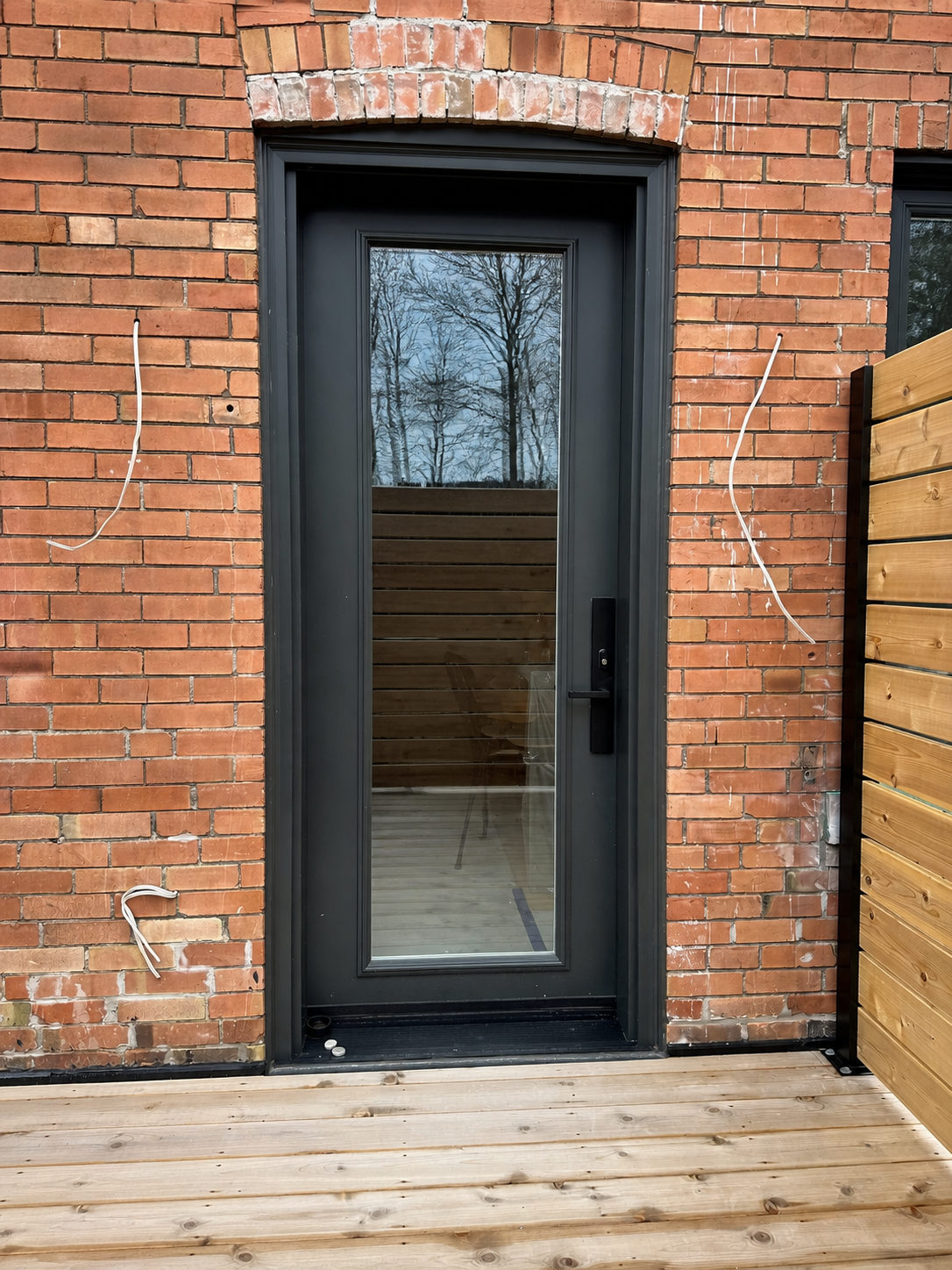
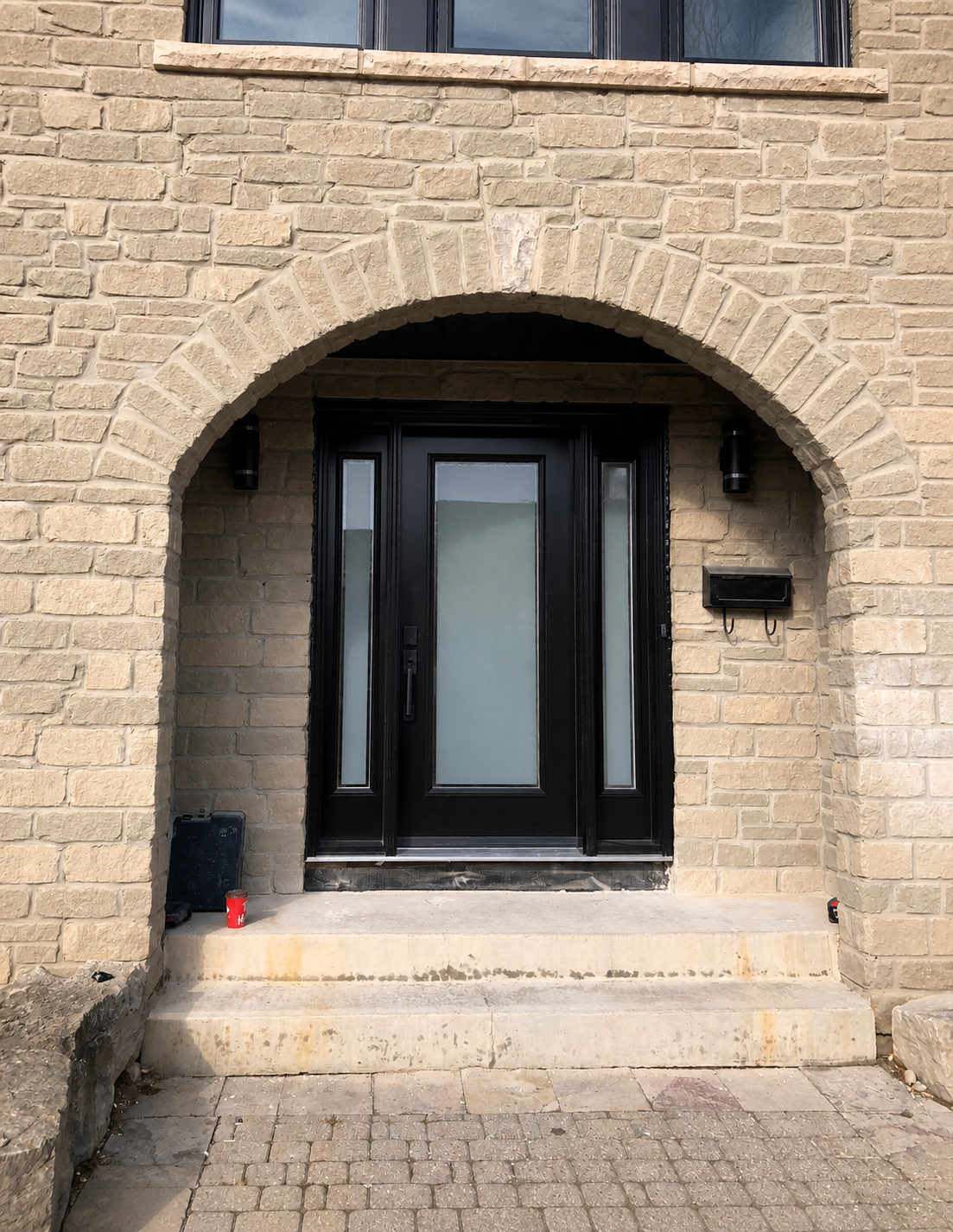
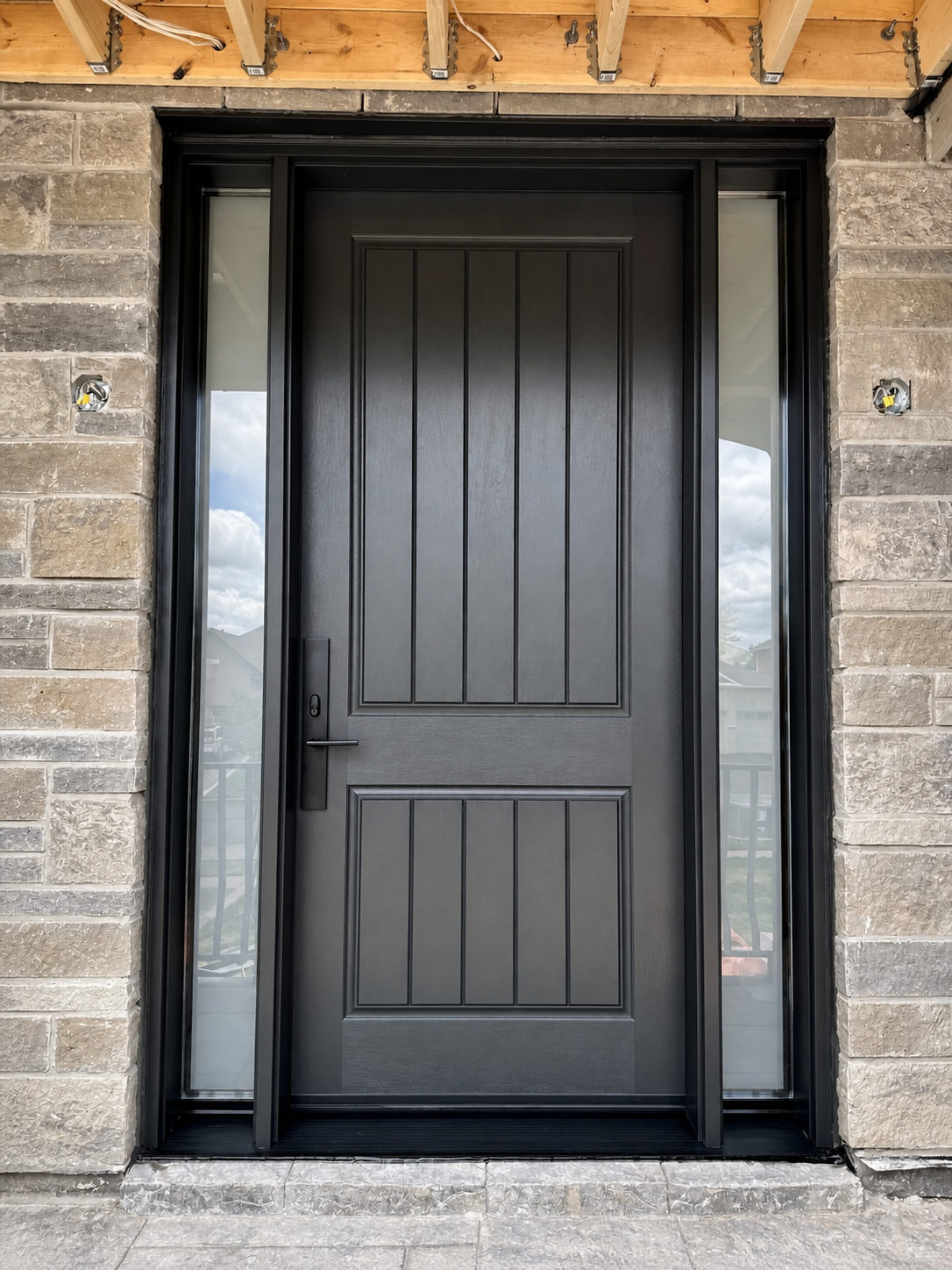
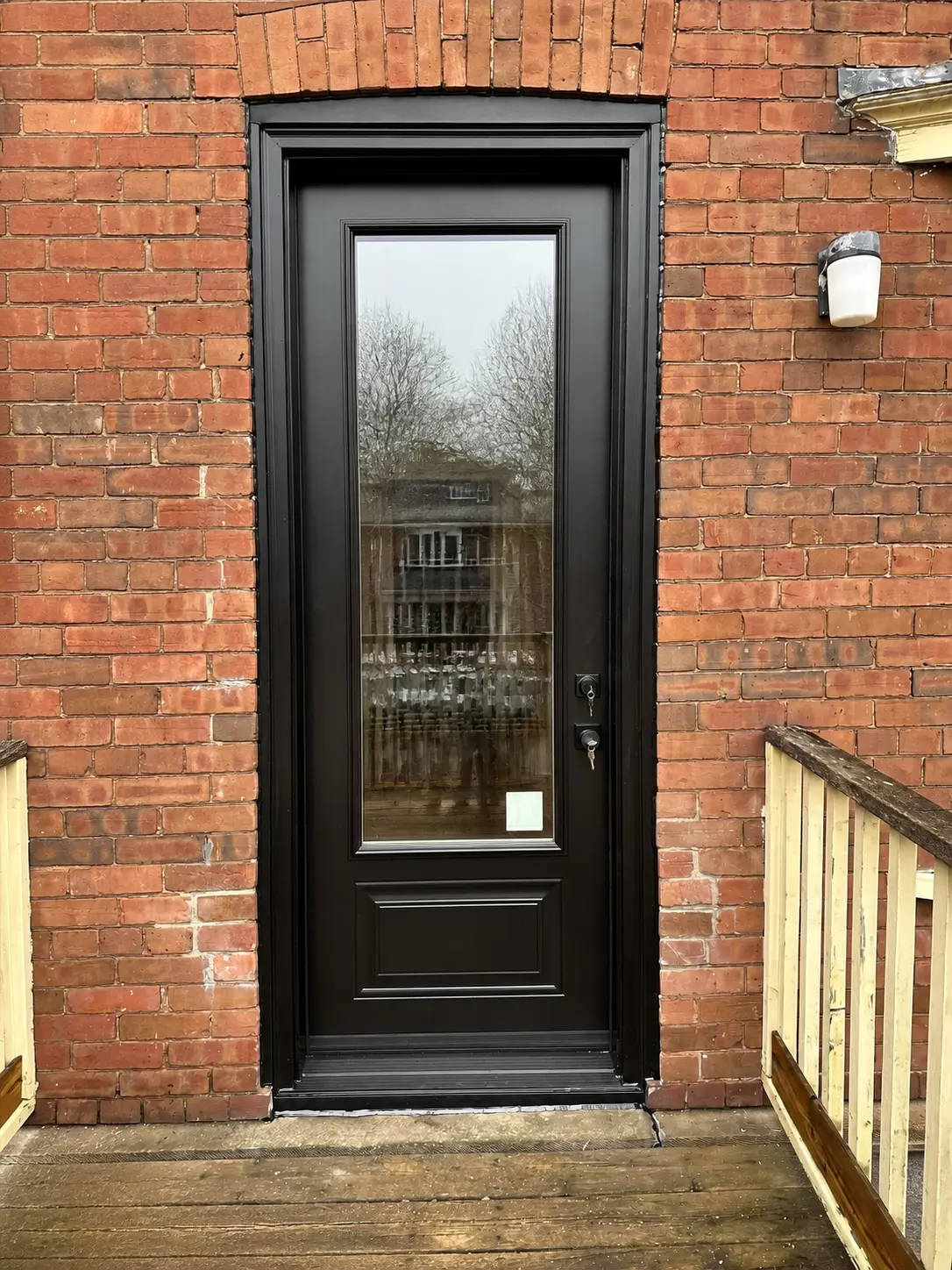
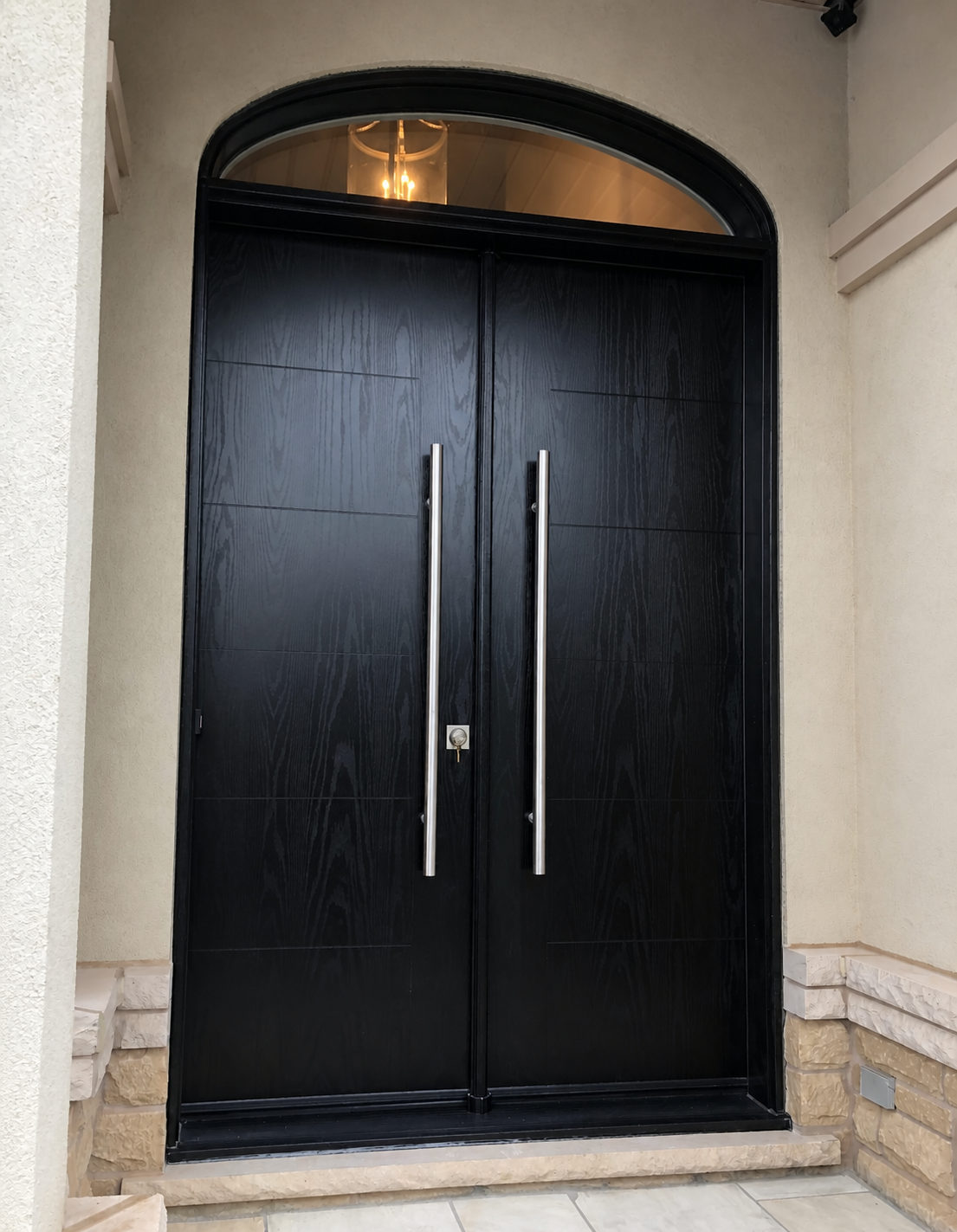
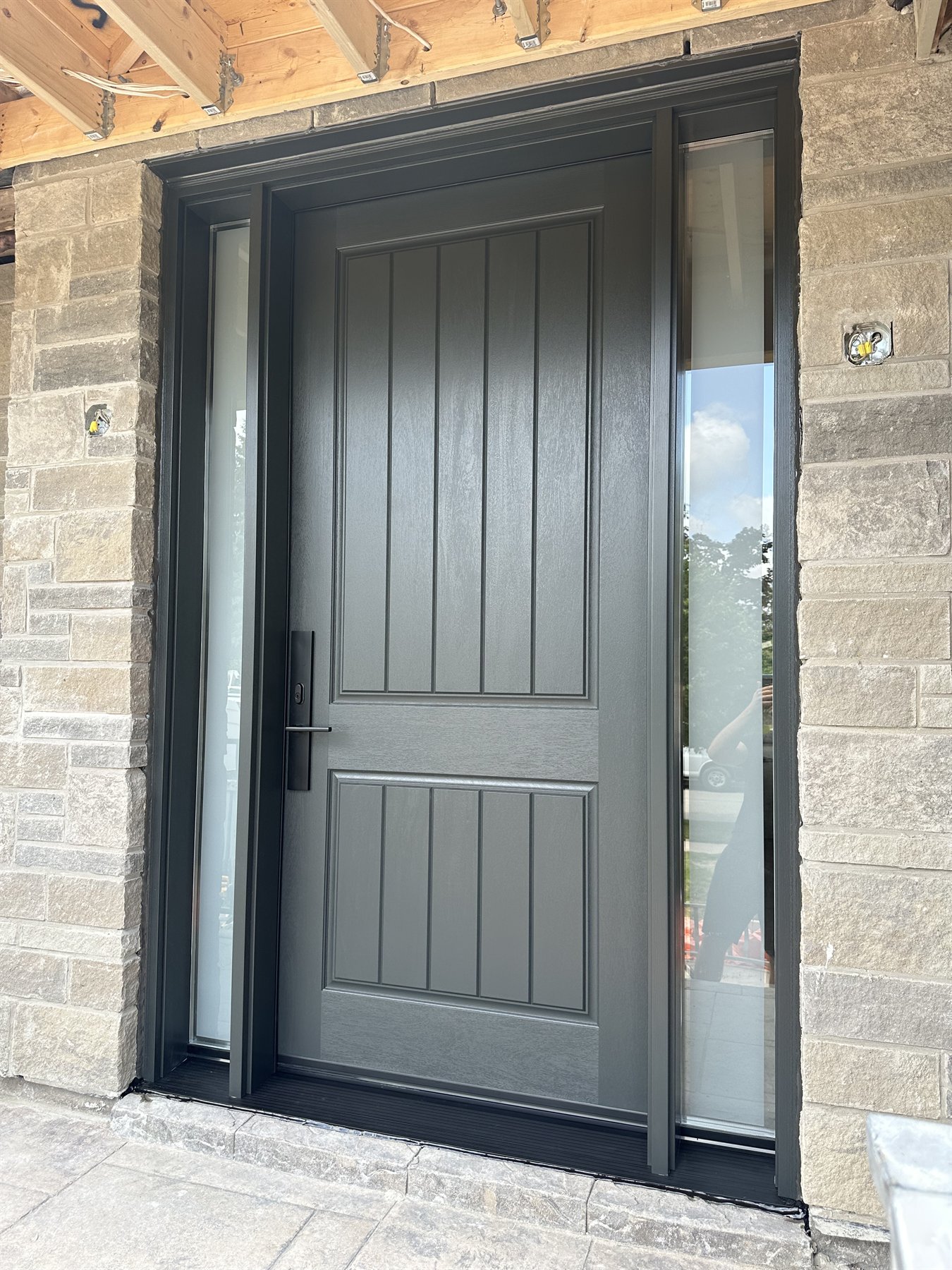
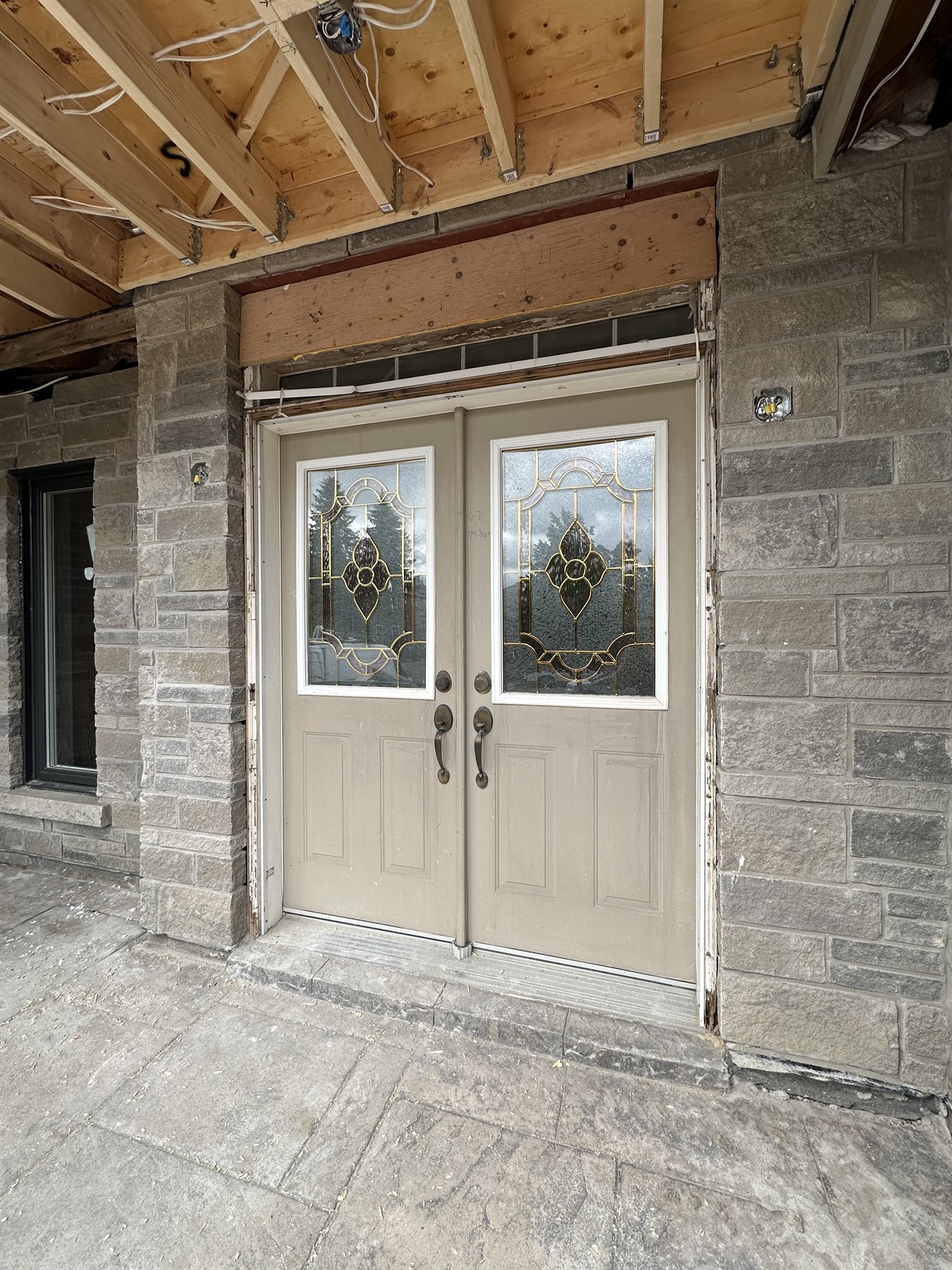
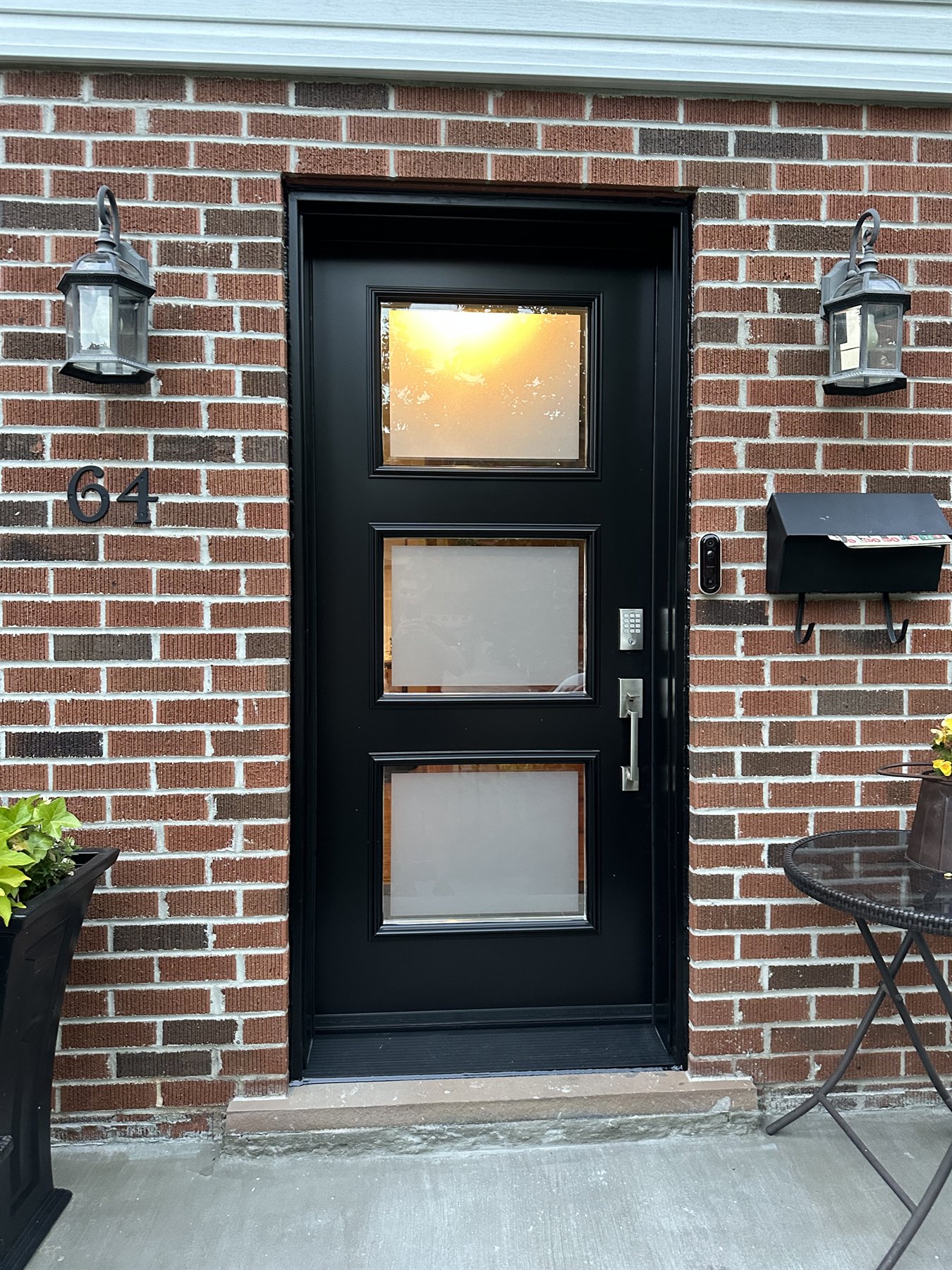
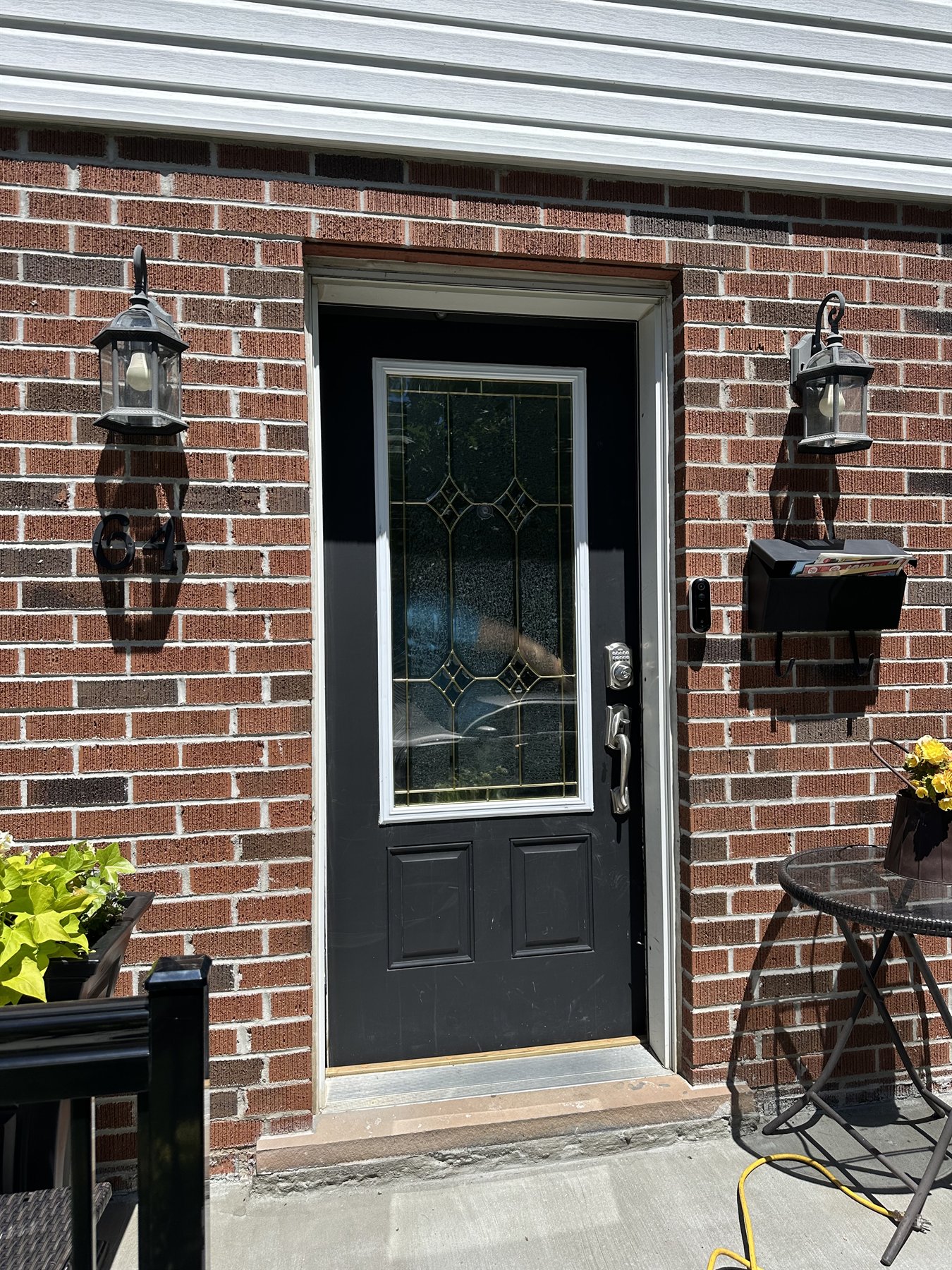
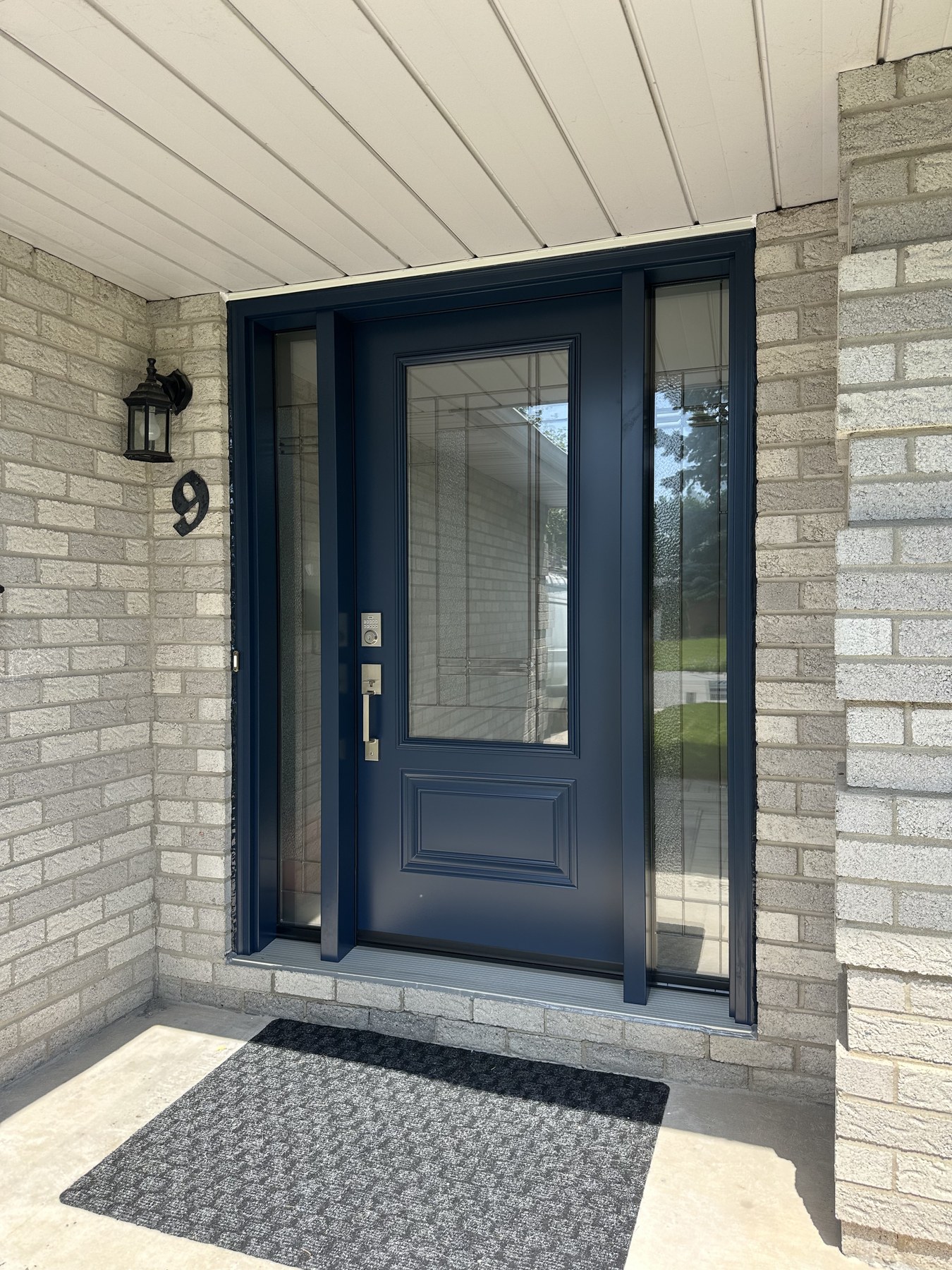
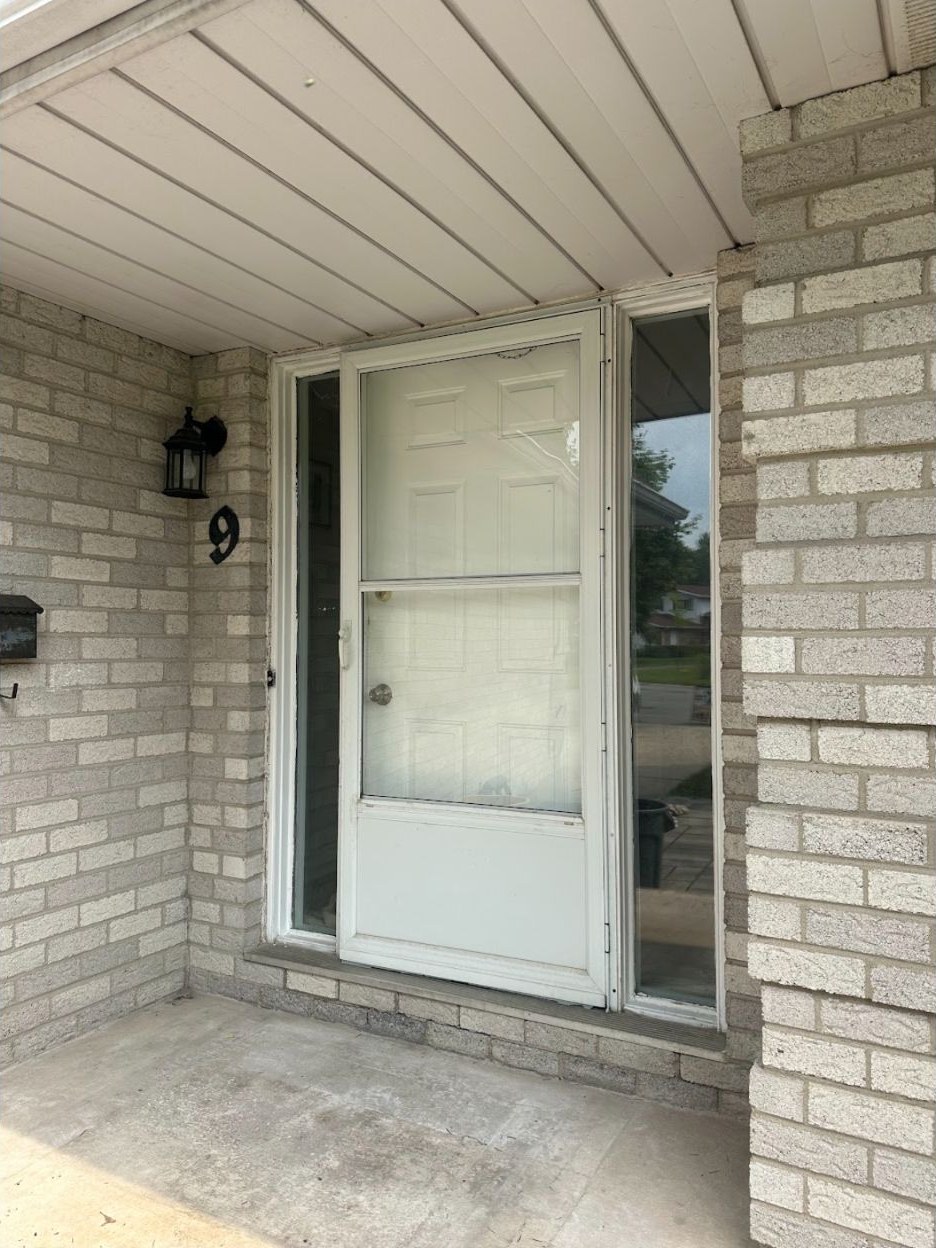
Photographed on site. No stock images, no supplier catalogue shots.
Single entry doors, with or without sidelites, fitted to the existing opening.
Two-leaf entries for wider openings, including French-style doors onto a yard or deck.
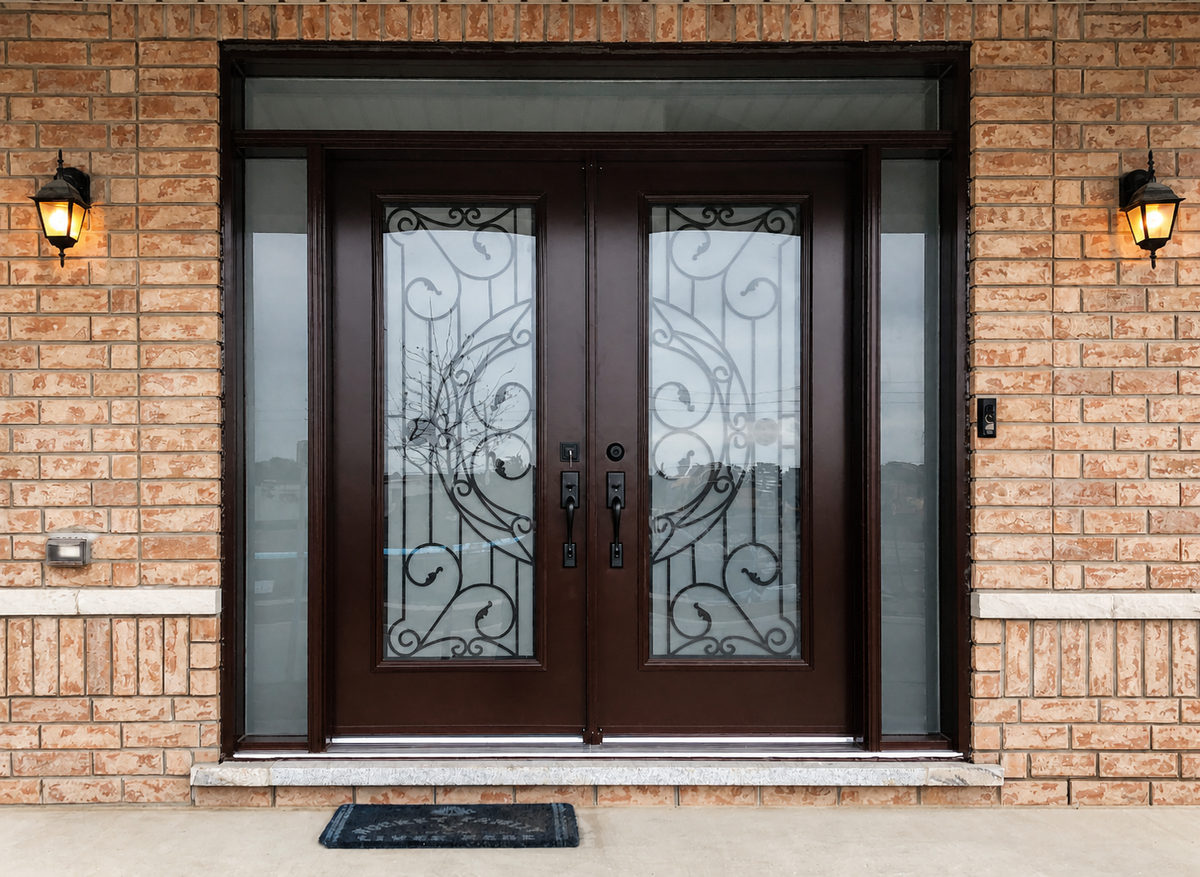
European-style tilt-and-turn styling with slim frames and full-height glass. Two examples from the same style of installation.
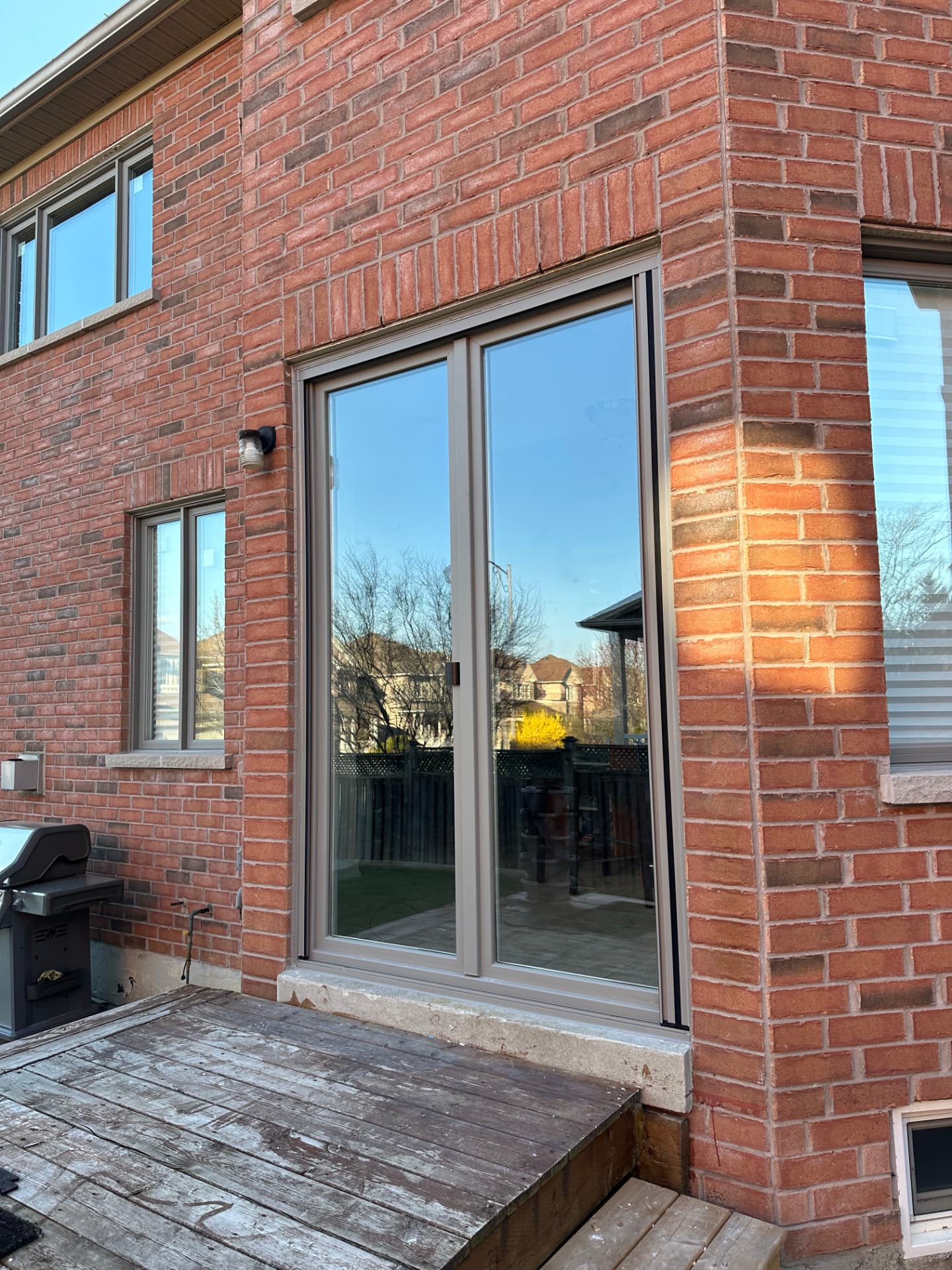
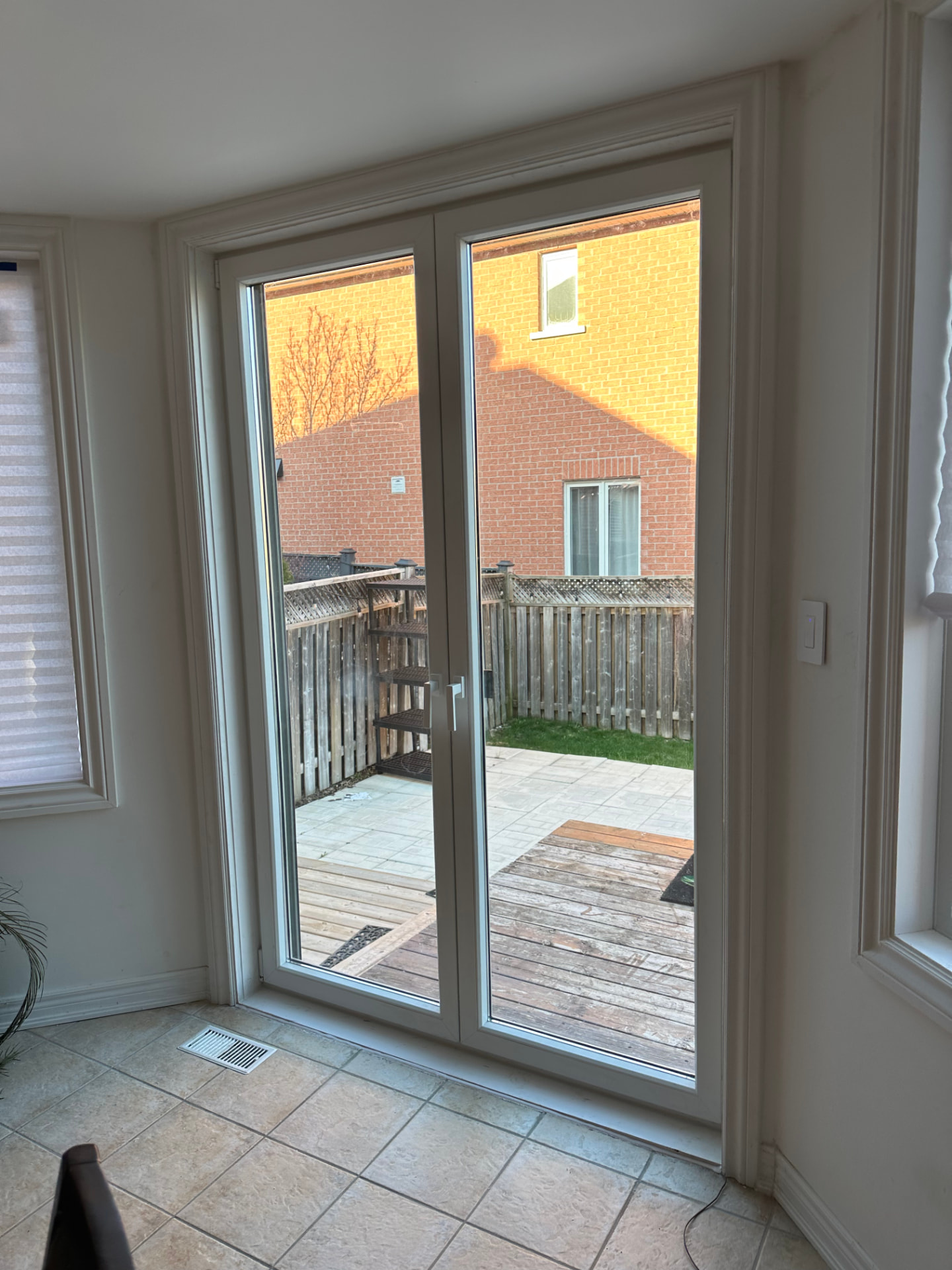
Sliding and multi-panel patio doors for rear openings, patios and decks.
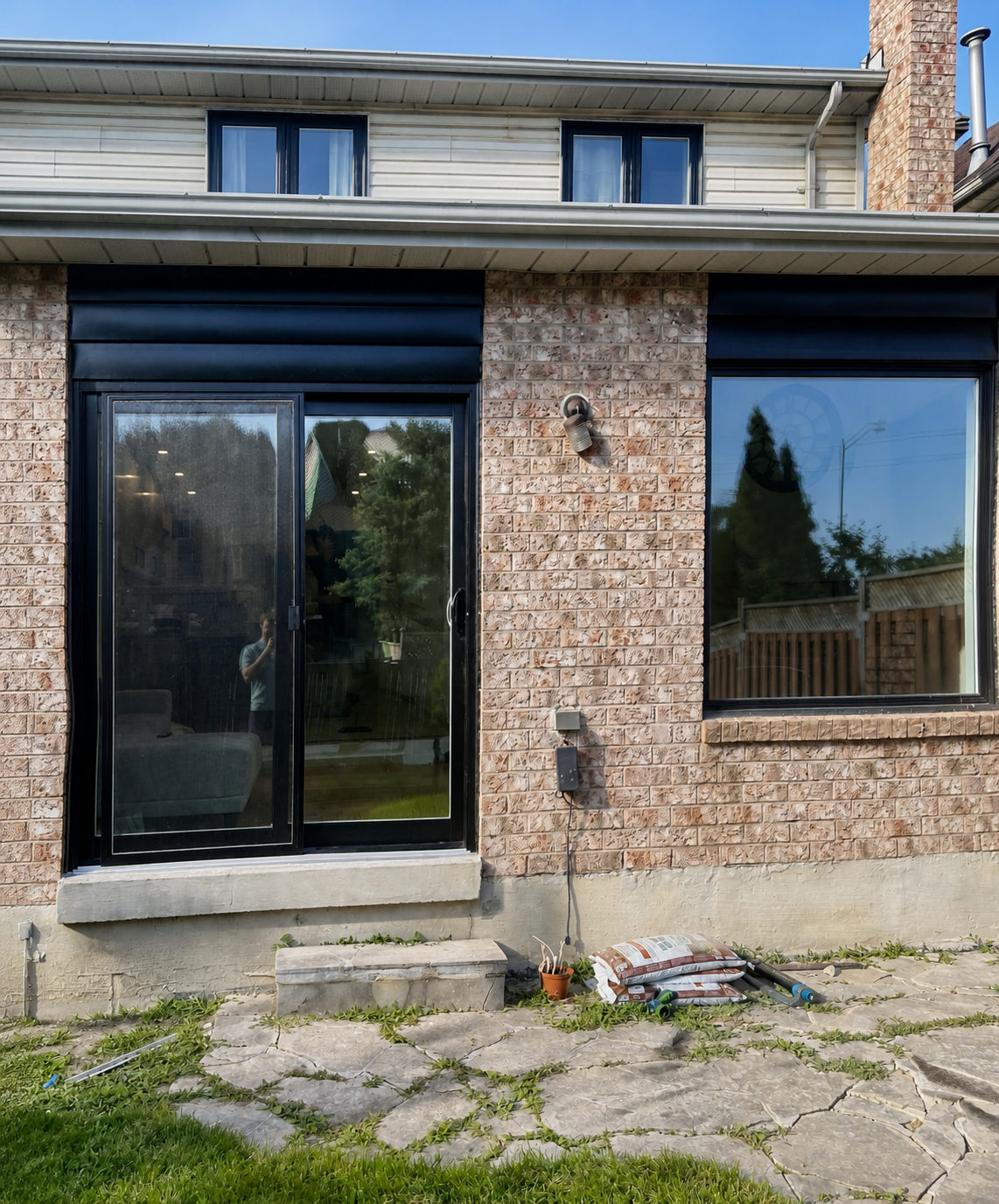
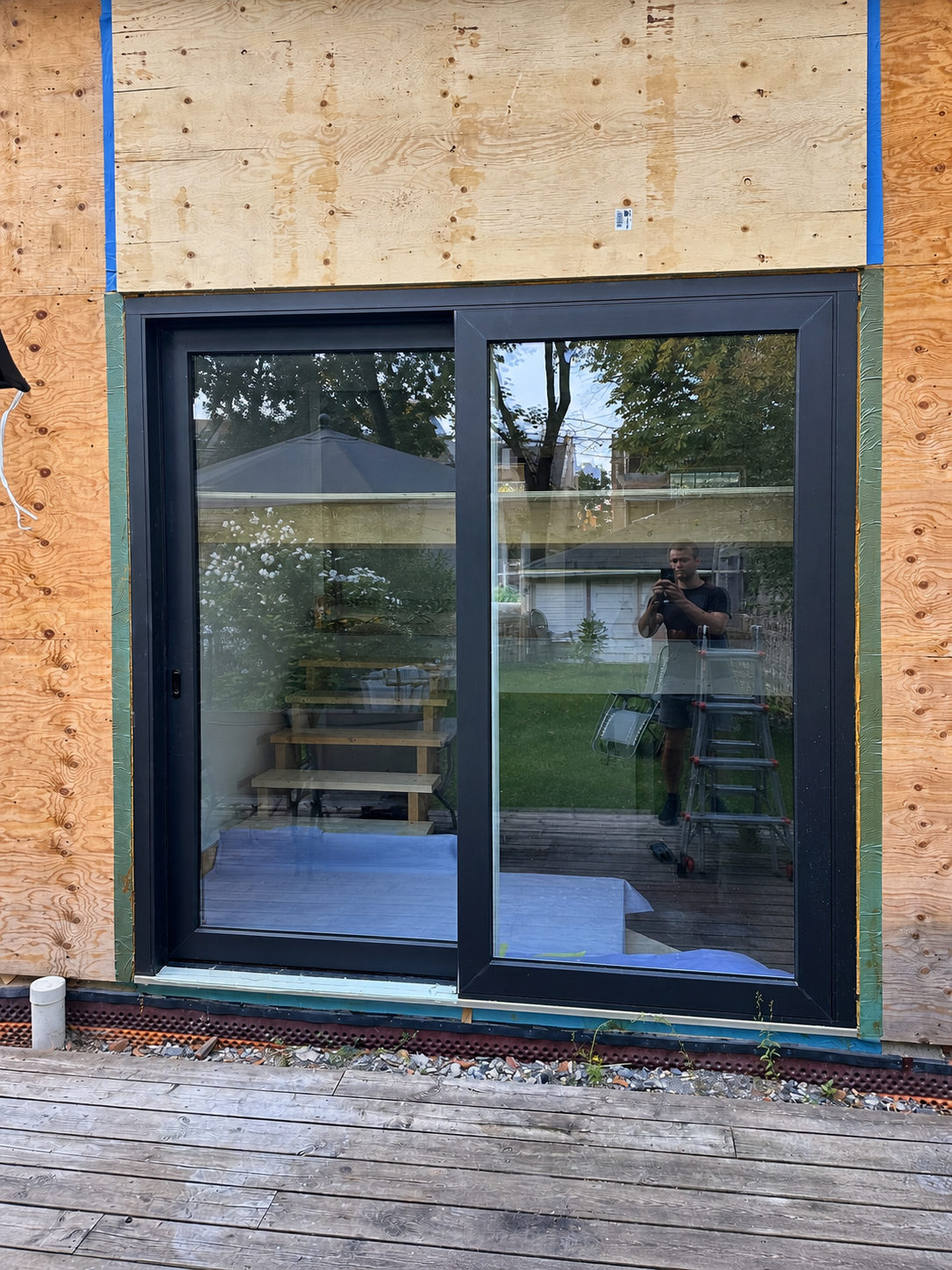
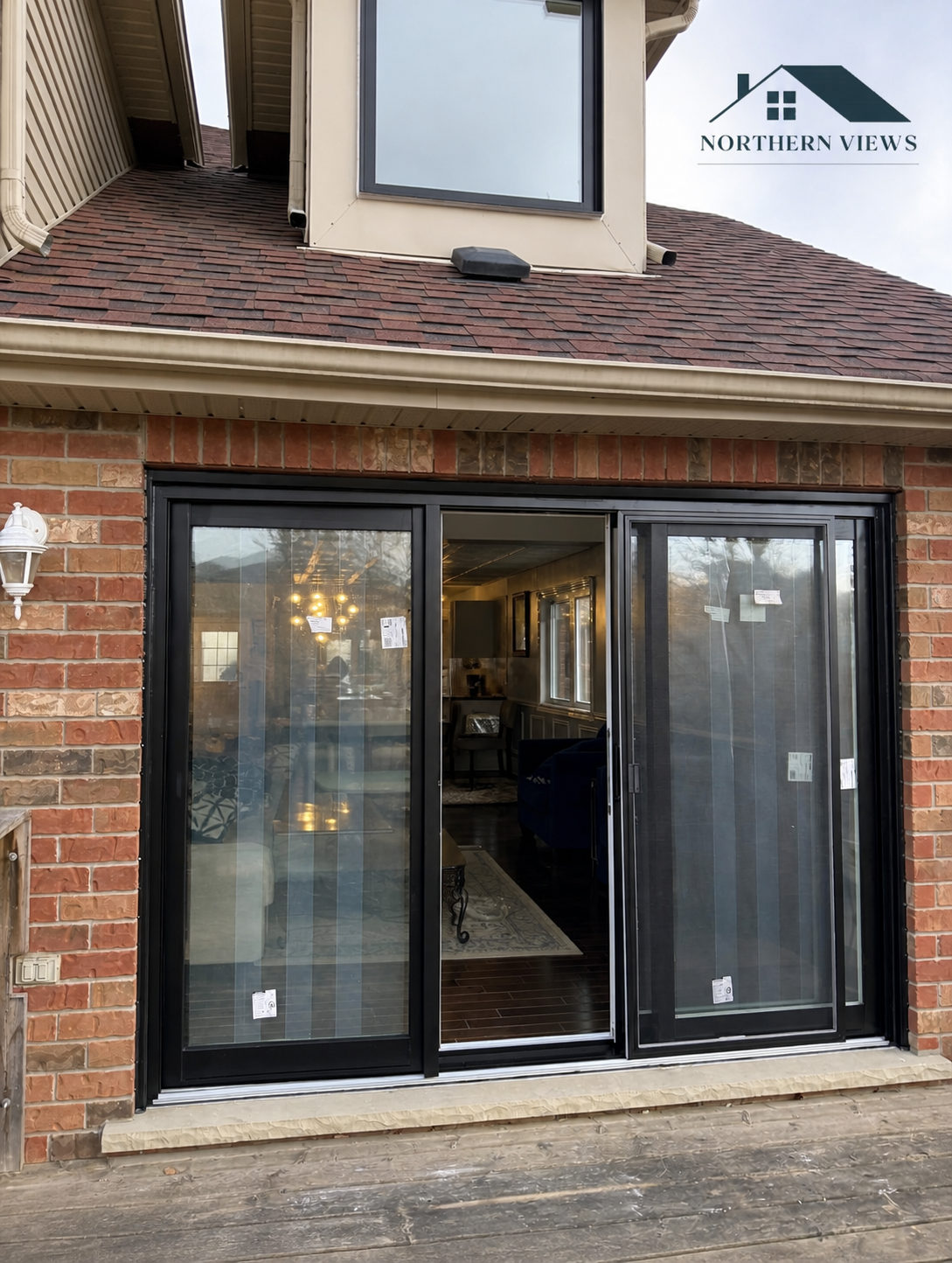
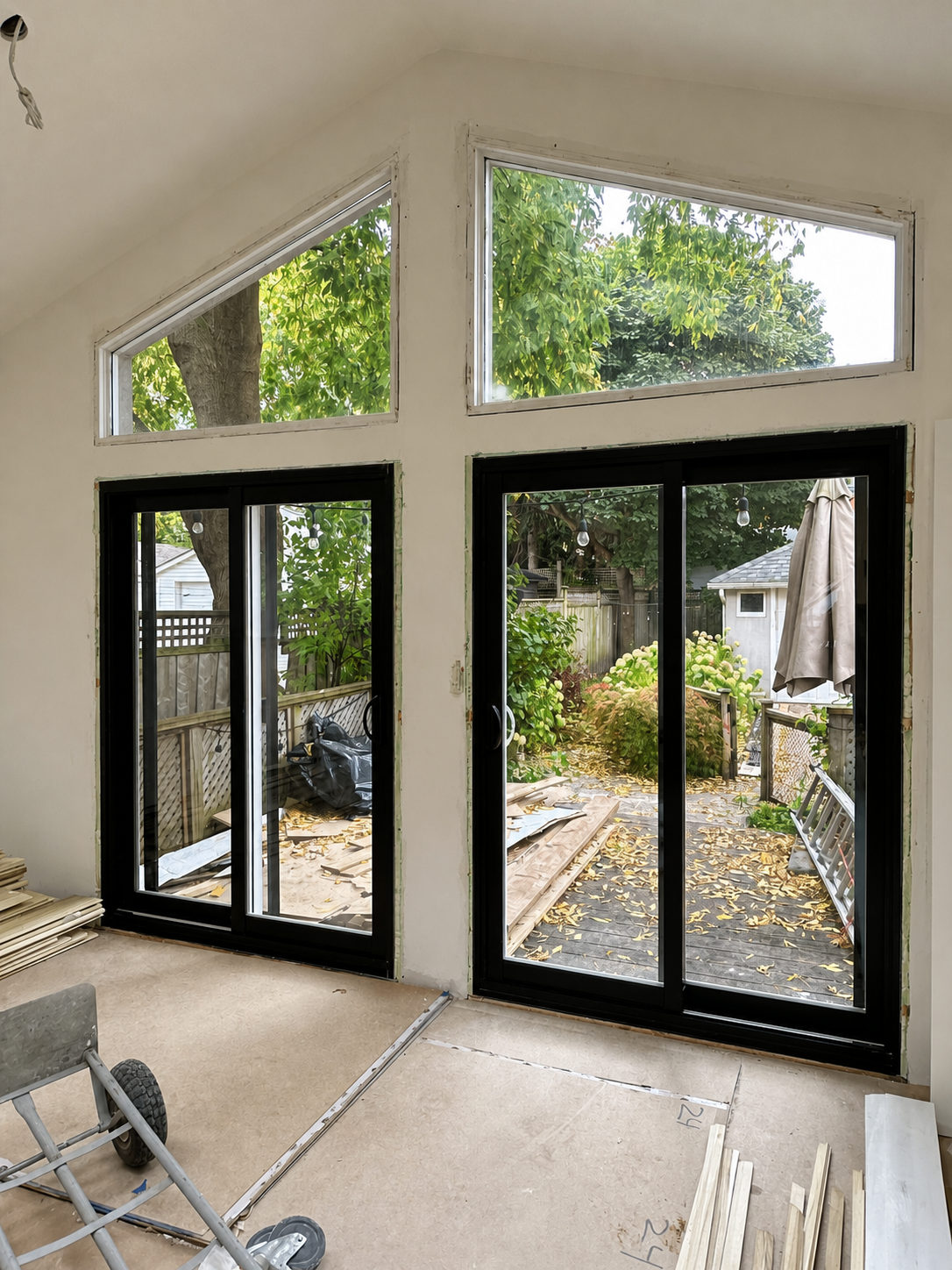
Doors installed with transoms and shaped transoms above the opening.
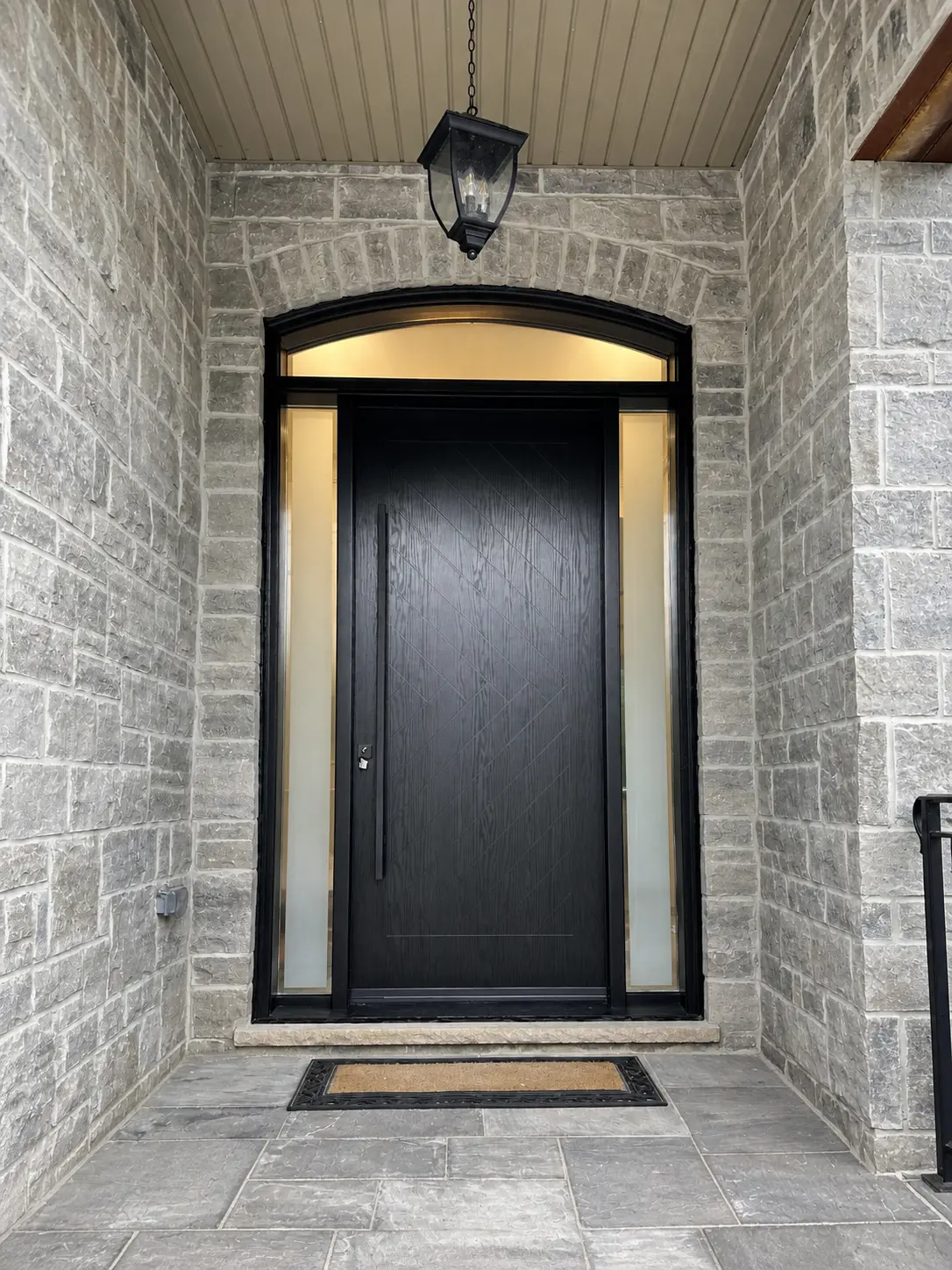
Almost every door problem we get called out to fix - the draft you can feel from the living room, the sticking latch, the door that has to be pulled to shut - comes back to the install, not the door slab.
So we measure the opening properly before anything is manufactured, and again before it goes in. The old door and the debris behind it come out and the opening gets cleaned up and prepared, instead of rushing the new door into a rough hole.
The door is set level on all sides and adjusted until it closes without gaps or binding. It is shimmed where it needs to be - at the hinges, at the lock, in the corners and along the bottom - then the frame is properly spray-foamed to insulate it. Outside we finish with the appropriate flashing and waterproof caulking, and inside we finish with trim.
This is the part the homeowner never sees. The salesperson has already left. A subcontract crew is working on a tight schedule. Trim goes on, the money changes hands, and two winters later there is a draft.
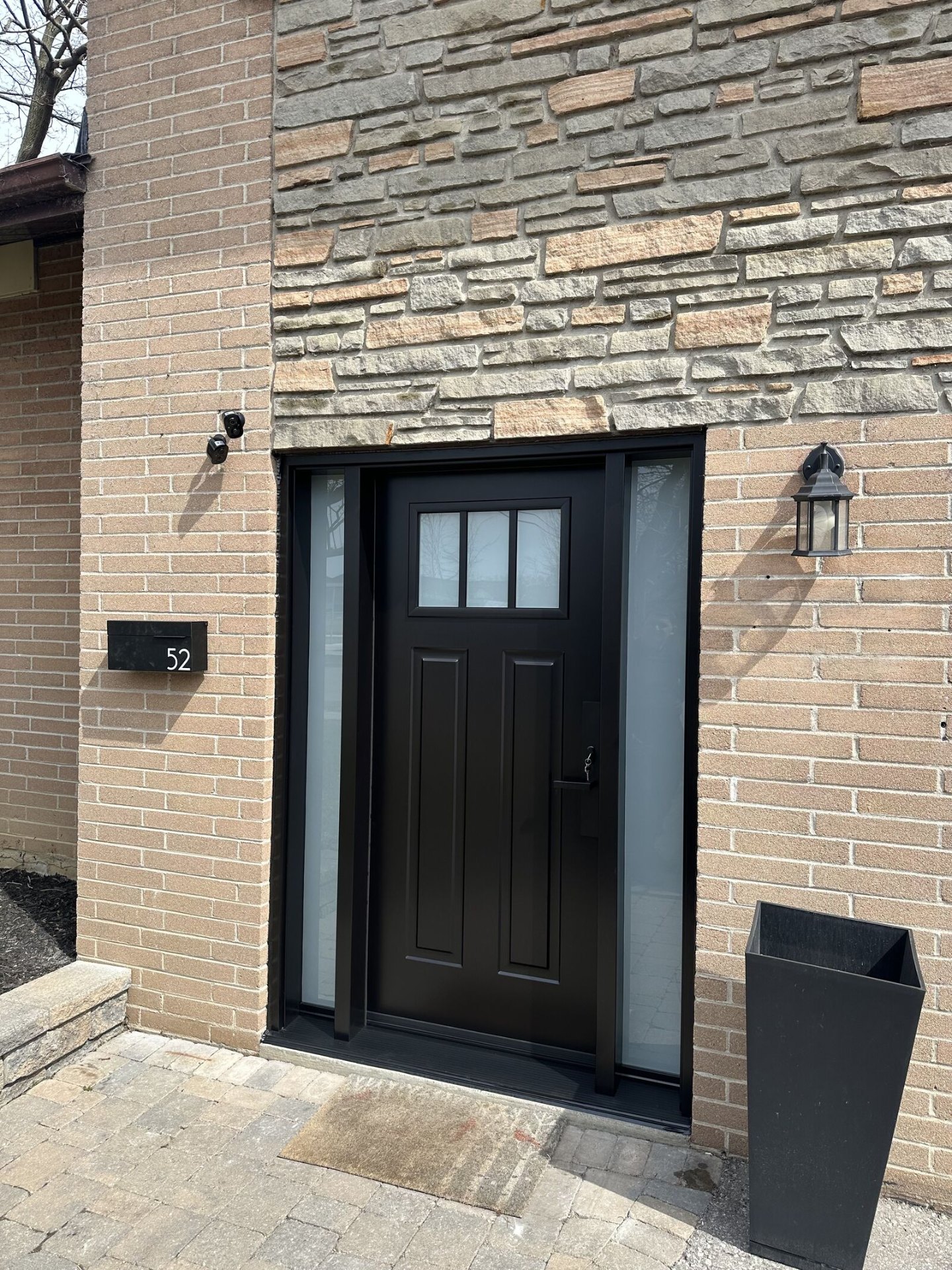
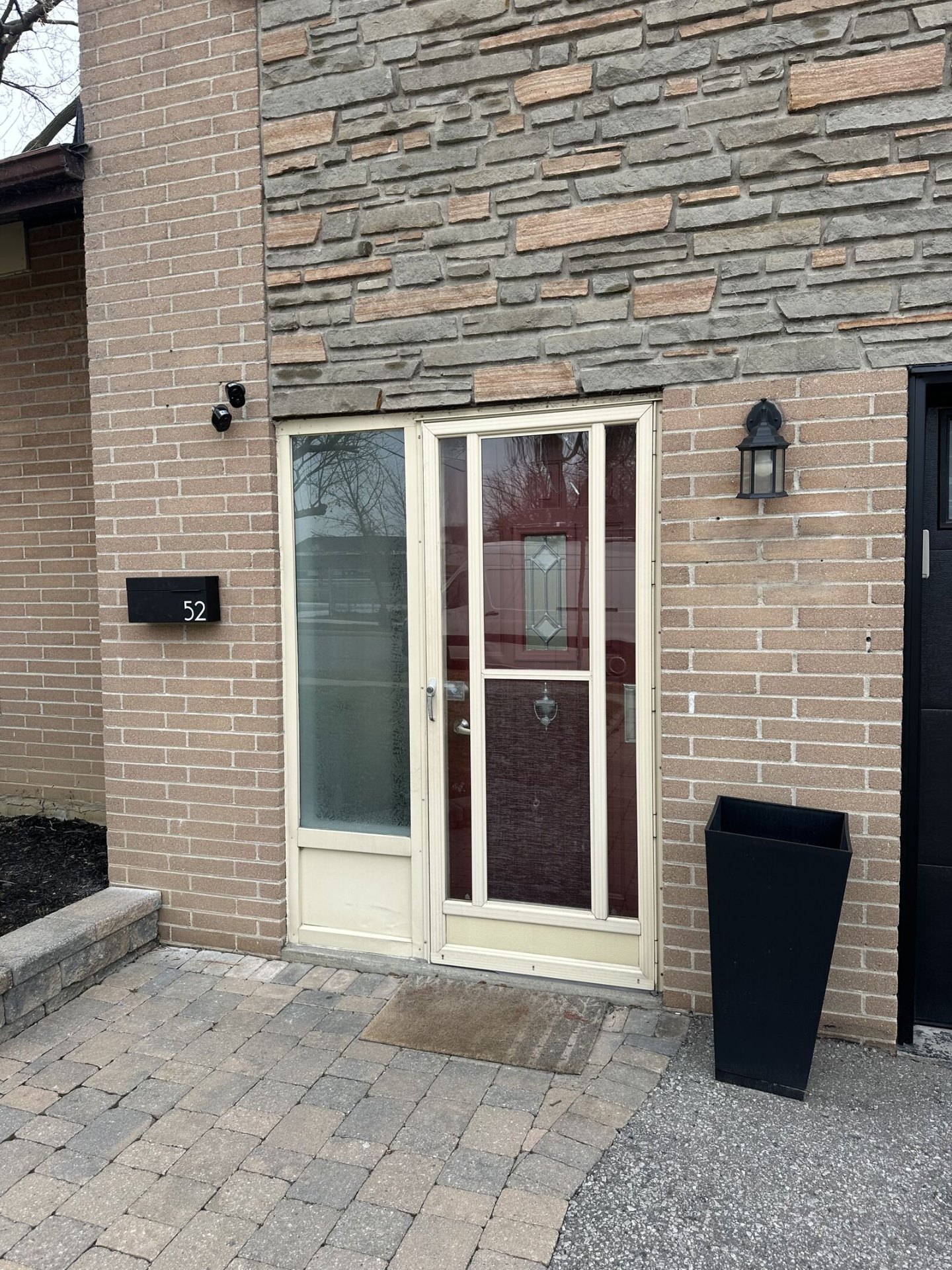
Your price is locked in for a full year. Decide when you're ready.
Measured and installed by the owner - no subcontractors.
Prefer to talk? Call 416-807-0701 - the owner picks up.